We are living history right now, you and me. The Coronavirus situation is bringing change and uncertainty to all of us, no matter where we live. No matter how you feel about the illness – overrated! frightening! – or how you feel about the precautions – strict! necessary! – or how you’re handling it (and all of this can change from moment to moment), understanding and managing fear is an important part of our society’s healthy response.
Why? Because, in a nutshell, fear hurts our health! It triggers the stress response of our body, which, among other things, actually suppresses our immune system. And a healthy immune system is something we all want for ourselves and our loved ones right now and always.
To be clear, I love our stress response. I think it is a wonderful, necessary, essential part of our amazing bodies. This stress can be just the motivation we need to act in ways that make us safer and healthier. But sometimes? The stress is triggered by fear that lives completely in the unknown. Or somewhere out of our control. And when there is nothing we can do about it? Or it’s constant? Then the stress just becomes overwhelming. At these times, learning to manage the stress is so important.
And with the constant, inevitable stress response of the last week (inevitable because our autonomous brain reacts to any change in just this way), I feel to share with you just a few tools to help you get the better of fear.
Just a bit about the science of fear: The autonomous part of our brain is our limbic system. It acts and reacts automatically, feels emotion but does not think. One of the structures within the limbic system is our amygdala. The amygdala is the emotional core of the brain and it’s first role is to trigger the fear response in the body. Other parts of the limbic system perpetuate the fear response and can even release emotional baggage which can be attached to the information from the amygdala. (Which is why fear so often brings up the emotions and memories of past experience.) When this fear response is activated, the stress response is activated, releasing adrenaline and cortisol and initiating the fight-flight-freeze response. Emotions increase. Heart rate and blood pressure increase. Digestion is decreased. And the immune system is suppressed by lowering the number of lymphocytes, which are white blood cells that help fight off infections. The lower the number of lymphocytes, the higher the risk for viruses.
Find Calm when You Feel Fear:
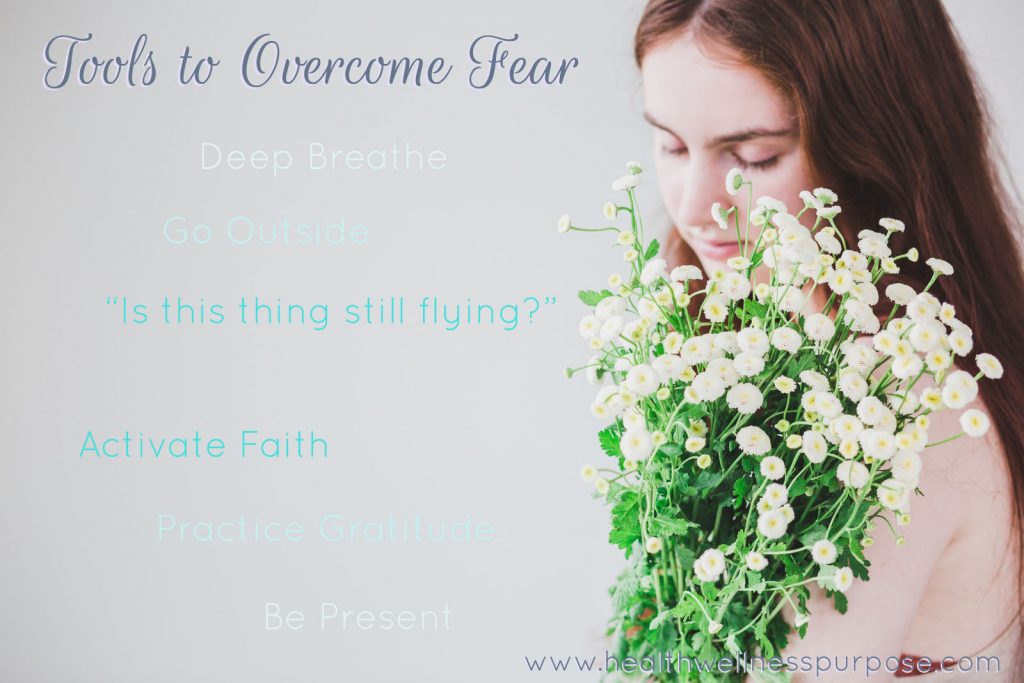
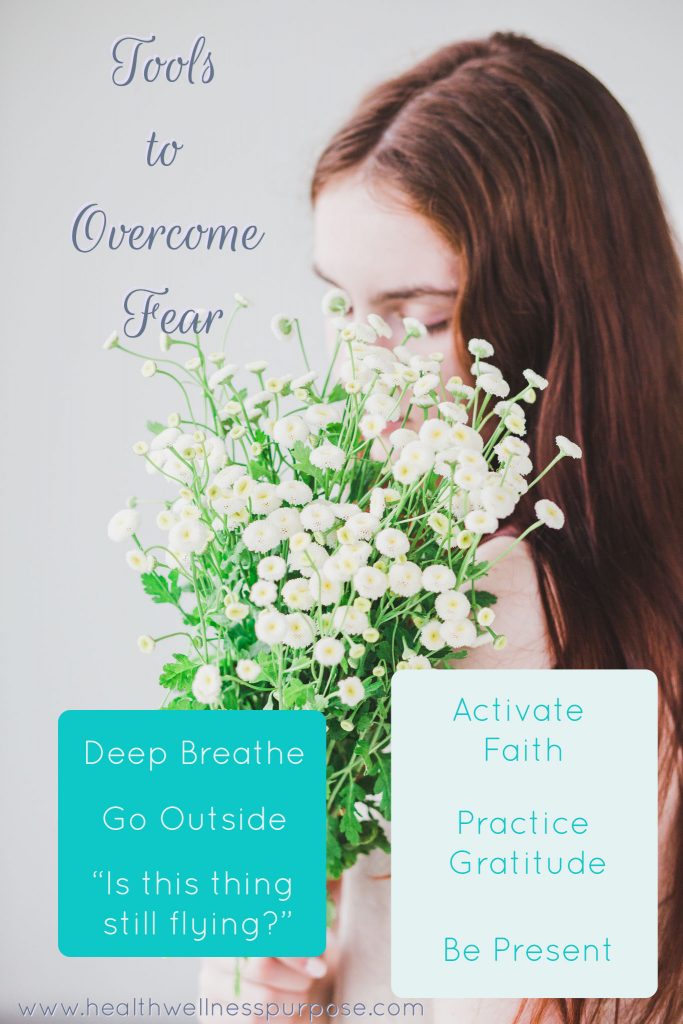
Deep Breathe
Deep breathing bypasses the thinking part of our brain and speaks right to the emotional limbic system. It combats the effects of the stress response, which turns on a calm response.
If your thoughts are racing, add in some counting to give your thoughts something to do: count to 4 breathing in and then 6 breathing out. Repeat until you feel calm.
Go Outside
Step outside, touch a tree, and deep breathe. Yes, I just suggested hugging a tree. Nature has been scientifically shown to have a direct result on heart rate and blood pressure – which are heightened with the fear/stress response. Calm those down and the limbic system calms down.
“Is this thing still flying?”
Once you’ve used some limbic calming techniques like the simple ones listed above, you can also engage some thoughts to help you. Follow the example of Alan Bean and ask yourself, “Is this thing still flying?” As a test pilot, Alan Bean was trained to ask himself that question to help him stay focused on the situation at hand when something went wrong. I heard his story from MJ Ryan, who wrote: “Bean’s training came in mighty handy when he was in the Apollo 12 capsule. As the spaceship took off, it was struck by lightning. Suddenly every warning light on the instrument panel flashed. Help! said Bean’s amygdala, we’re going to die. Then he remembered the question. Looking out the little porthole above his head, he realized that not only was the spacecraft still flying, but it was still pointed upward. So rather than aborting the mission, he dealt with each warning light one by one until all functions were restored. And yes, he made it to the moon. The next time your amygdala goes off, try stopping and asking, “Is this thing still flying?” In other words, is this truly a life or death situation? Almost certainly, it’s not. Recognizing that truth will help your amygdala calm down so you can use the rest of your brain to solve the problem.”
Deal with each warning light in your life one by one until all your functions are restored. Keep your thoughts calm by giving them something productive to do.
Stay Calm in Prolonged Fearful Situations:
Activate Faith
A perspective bigger than this moment always helps mitigate fear. And getting in touch with the divine helps us keep the things of this world in perspective. Spend some time in prayer, in scriptures, in meditation. Believe that everything we experience can be used by God for our growth. We can gain wisdom through experience.
Practice Gratitude
Appreciation is the antidote for fear. Simple, but effective.
Right now, what are you grateful for? Extra time with family? Modern medicine? What else?
Be Present
Fear that doesn’t help us lives in the unknown. This is often ‘what ifs’ about the past or the future, but in the Present, we can open up to the possibilities of now.
What possibilities exist in this new reality that have the potential of joy, growth, or learning? Focus there.
I wish you peace, happiness, joy and health during this time of uncertainty.
Love, Kenna
By the way, I have a whole course about strategies and tools to fill your life with Calm. It’s called Calm and Centered. Just in case you’re interested. Absolutely no pressure, of course. And I would love to give you all a discount during this time when regular life has stalled for a bit and we’re looking for tools to help us all navigate this new situation. 75% off. Discount Code: ChooseCalm. It’s just one way I feel perhaps I can help. Sending all my good wishes and prayers.